Tuesday, July 12, 2011

The Study of Community in American Sociology, c.1900 - c.1975: Part III – The Reception of Tonnies Gemeinschaft und Gesellschaft [Community and Society]

PART III – THE RECEPTION OF TONNIES

Ferdinand Tonnies
Louis Wirth asserted that “when we use the term ‘community’ we seek to isolate and to emphasize the physical, spatial, and symbolic aspects of human group life, whereas by the term ‘society’ we wish to bring into focus and to stress the psychic, deliberative, rational, normative, and congenial phases of group existence” (Wirth 1951:295). Wirth did not understand that the period when community and society could be theoretically separated had already come to an end. This oversight is easily understood if we remember that Wirth’s statement was the general view of sociologists of the time. The work of Giddings (1910, 1922, 1924), Cooley (1897, 1918), MacIver (1932), and many others laid the groundwork for the investigation of the relationship between community and society, but not all did so in response to Tonnies’ dichotomy. Odum argued that Tonnies division was not widely held and the attention that it was currently receiving was contributing to “the neglect of the scientific study of community” (1951:292). He lamented that “as late as 1947 the distinction between society and community could still be debated at a symposium called ‘The World Community.’’’ Despite this, Tonnies’ dichotomy of Gemeinschaft and Gesellschaft has figured in almost every postwar sociological discussion on the nature of society. Tonnies reception by American sociology began in earnest with the postwar publication of the English translation in 1957 framed by the commentaries of Sorokin, Loomis, and Loomis and McKinney. The distinction that the commentators make between the “two modes of mentality and behavior, and two different types of society” (Sorokin 1957:vii) becomes a fundamental discursive regularity in sociological theory. For Tonnies, the dichotomy of community and society was complex and rested on five others “dealing with one’s relation to one’s fellow beings’: 1) acquaintanceship and strangeness; 2) sympathy and apathy; 3) confidence and mistrust; 4) interdependence, “the condition of being bound to others.... a feeling or a realization of moral obligation, moral imperative, or prohibition, and a righteous aversion to the consequences of incorrect, illegal and unlawful, as well as of immoral and indecent conduct and action”; and 5) the “bond” of economic relations of exchange (1957:237).
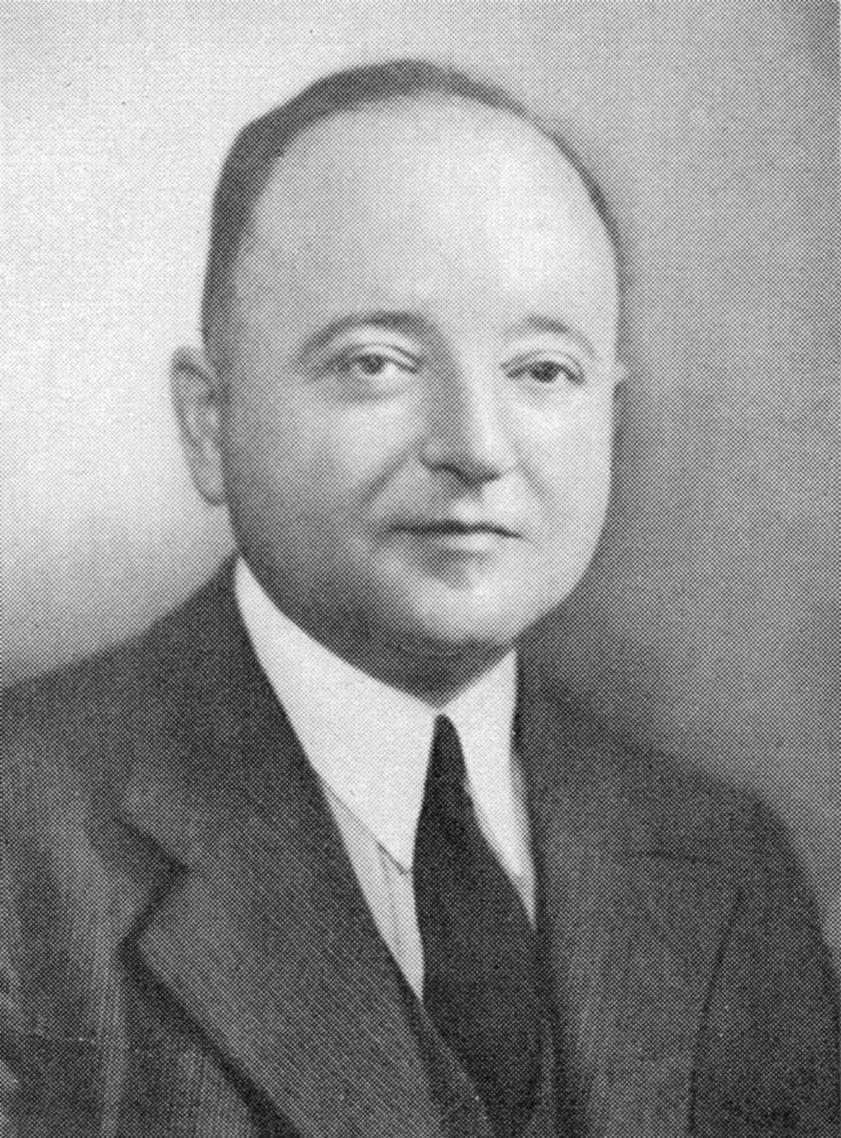
Louis Wirth

In his Table of Concepts, Loomis used these binary types to reveal Tonnies’ grand classificatory structure even as he acknowledged that Tonnies work lacks a “perfectly logically ordered construction.... The original book, to use Stoltenberg’s apt characterization, resembles the beauty of an old castle” (Loomis 1957:263). This description discloses the relation of Loomis’ Table of Concepts to Tonnies’ text, as well as the assumptions that underlie both the table and the text. Though Loomis does not acknowledge it, his Table of Concepts, while only intended to provide a schematic representation of Tonnies concepts, merges with the original text.


The Table of Concepts is on page 269.

The Table of Concepts presents Tonnies work as a structure of intricately arranged binary concepts, with some pairs hierarchically related to others, but all are equally idealized abstractions. There emerges from the Table three taxonomic concepts --- “vegetative,” “animal,” and “mental”---that modify each other in a movement from the most primitive to a modernity wherein the development of each community is recapitulated in the development of the others. This movement through successive developmental stages is constitutive of a theory of social evolution. “In the same way as the individual natural will evolves into pure thinking and rational will, which tends to dissolve and subjugate its predecessors, the original collective forms of Gemeinschaft have developed into Gesellschaft and the rational will of the Gesellschaft. In the course of history, folk culture has given rise to the civilization of the state” (Tonnies 1957:III).

In further commentary, Loomis and McKinney view the structure of the dichotomies underlying Gemeinschaft und Gesellschaft as providing a paradigm for a science of community that can distinguish “fundamentally different types of social organization” and provide a “standard by which the processes of change or intermediate structural forms can be comprehended from the perspective of the continuum” (Loomis and McKinney 1957:12). It is along this continuum that sociologists established the link between the classification of social groups and their evolution. “It was Tonnies' belief that it remained for the scientific man to devise the means of freeing the majority from the role of mere machines or puppets; but that the scientist must have different eyes than those of the social engineer who constructs or copies Utopian plans and attempts to fit people into them; he must learn that society is a living, organic thing, unfolding naturally from within like a growing embryo or plant bud” (Loomis 1957). This is the preformist concept of evolution that was radically transformed by Darwin’s descent with modification but survived in both neo-Hegelianism and sociological organicism.
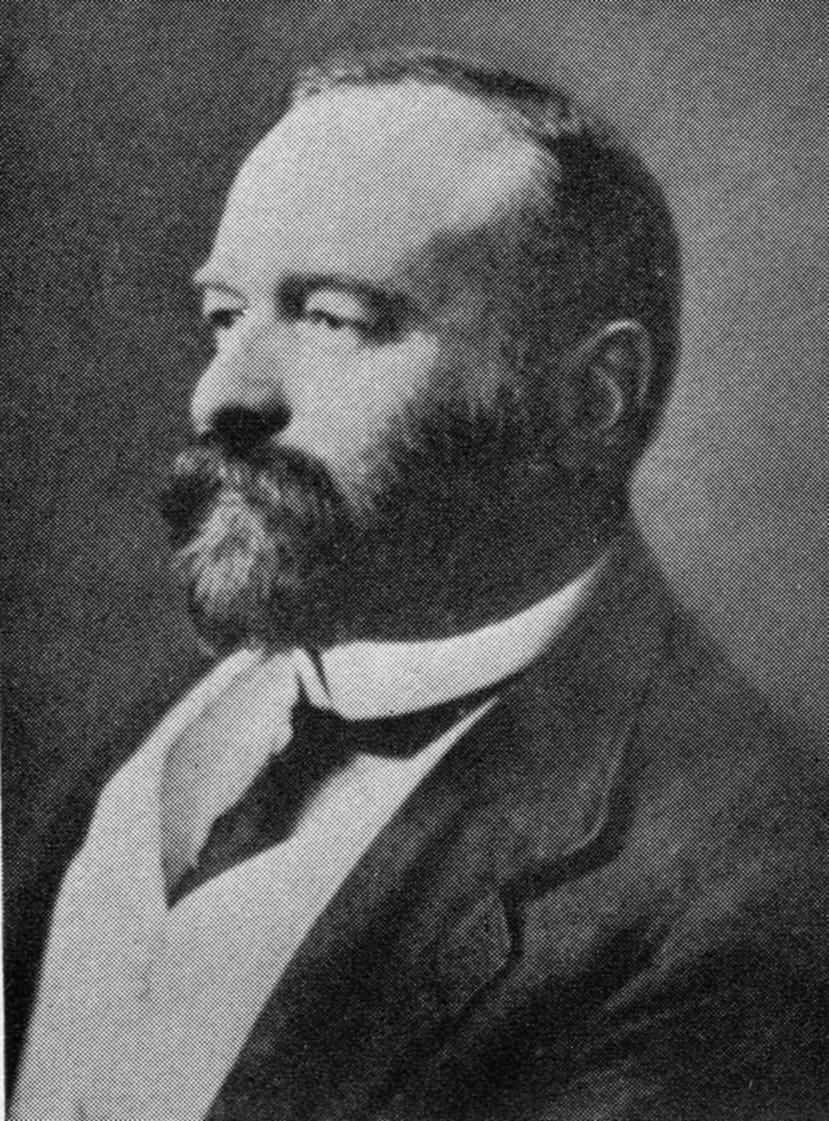
Franklin Giddings
The Loomis and McKinney commentary places Tonnies in a tradition of their own construction that begins with Confucius and Plato, and ends with Durkheim. In this scheme, Tonnies accomplishment was in making the differences between community and society into a sociological problem around which the discipline could orientated itself. The Table of Concepts served as both an outline of Tonnies work and an attempt to establish the outer limits of the sociological discourse of community. After the translation of Gemeinschaft und Gesellschaft, the concepts of definition, morphological analysis, and classification of types came to dominate the sociological study of community. Tonnies became a key referent, but previous to the 1950s the work in American sociology presents a different genealogy. Giddings discussion of classification in relation to social evolution or “social telesis” a reminder to us that not everyone took the view that Gemeinschaft replaces Gesellschaft. Many American sociologists followed Giddings in understanding community as not previous to, but rather as constitutive of society, the boundaries of civilization, and the goal of social progress.

There were other theoretical perspectives on community that deserve at least a short digression. In particular, Marx and Simmel offered different approaches despite being misread on occasion so as to appear to endorse Tonnies' ideal dichotomies. For example, Marx used the words gemeinwesen and gemeinschaft almost interchangeably and usually both are translated as “community.” Marx’s gemeinwesen is literally “common character” and is used in the context of his discussion of the social relations of capital and its “the community of money” which expresses the social and historical aspects of this “common character.” In contrast, Tonnies gemeinschaft (“common stock”) implies both share-holding in an institution as well as a line of descent of a stock or “volk.”

The analysis of community in the Grundrisse described the changes in the social relations between humans. In the Grundrisse, the earth itself is the first medium of community, for it is the essence of humanness to cooperate in the social labor necessary to extract the necessities of social life. With the separation of city and country, the earth ceased to be the medium of community, at least in the cities where money rather than the authority of the chief became the representation of Gemeinwesen: “Money thereby directly and simultaneously becomes the real community [Gemeinwesen], since it is the general substance of survival for all, and at the same time, in money the community [Gemeinwesen] is at the same time a mere abstraction, a mere external, accidental thing for the individual, and at the same time merely a means for his satisfaction as an isolated individual” (Marx 1993:226).

Marx did not romanticize past social formations or suggest the restoration of a previous real or imagined community. As for the present --- our present --- there is only “the community of money” where at At the level of the everyday we do not know that we are producing and reproducing the multiple determinations of this “community of money.” In this light, the much discussed loss of community in America was not the passing of some idyllic community, but only a different formation of the gemeinwesen of money. And yet the “loss of community” was and still is denounced as the loss of something supposedly quite ancient. For Marx, community was not something lost, but something produced. And perhaps most importantly, Marx disassociated community from consanguinity and place.1 “The metropolitan type arises from the dominance of money as the form of modernity.... For Simmel modern social life is synonymous with the moment when exchange relations become the dominant social fact of metropolitan life” (Aronowitz c.1992).

Edmund Des. Brunner noted that even in the most idyllic of societies the idea of community offers no “break on self-interest.” Instead, every utopia contains a system of social relations wherein “each social rank has its customs, determined functions, rights and duties may in effect be the skillful manipulations of those in the top social ranks to maintain their existing status and privileges.” Moreover, Brunner recognized that “the earliest rural sociologists” often used terms “descriptive of community which if employed today would be said to show [Tonnies’] influence” when in fact they wrote “without benefit of Tonnies.” American sociologists had developed the “heritage of our own science... in terms of our national locale.” Tonnies would no doubt recognize similarities, but they result from convergence rather than influence (Brunner, 1942:76). Rudolf Heberle, whose essay on Tonnies was the target of Brunner’s critique, responded that while there might have been similarities between the American rural sociologists and Tonnies, the Americans never systematized their study of community and so remained empirical without becoming scientific. On the other hand, Heberle argued that Tonnies gave the discipline a system of types that could be used to classify communities. The meaning of community would be found “in studying communities and “typing” them within some larger theoretical frame of reference” (Hollingshead, 1948:144).

Next: Hollingshead and Hillery

Previous
Part I: Introduction
Part II: Understanding Community

Sunday, July 3, 2011

The Study of Community in American Sociology, c.1900 - c.1975: Part II - Understanding Community

The Study of Community in American Sociology, c.1900 - c.1975


"The Crowd"


A version of this series of blog posts was presented at the Annual Meeting of the American Sociological Association, August 2003.

Part II: UNDERSTANDING COMMUNITY

The meaning of community has been asked in many ways and the manner of raising the question tell us a great deal about the social conflicts expressed by the proliferation of authoritative answers. The traditional questions concerning community were always questions of definition and classification, nomenclature and description, and over time these proved insufficient to furthering the sociological study of community. It is not that our contemporary questions are better and the traditional ones are simply obsolete. Our understanding of community results from the continuities and discontinuities in the sociological investigation of community.

For example, a break occurred c.1975 that marked the end of a period in which the sociological investigation into community centered on the requirements of definition and classification, the mapping of real or imagined territories, and the tracing of a speculative evolutionary development. In our own period the question of community centers on identity, new social movements, enclosures of community, and the degeneration accompanying a lack of community. These breaks were not simply due to the internal dynamics of discourse, but to the social dislocations and expressions of the forces of modernity.

Early in the study of community, we find an emphasis on problems of definition, classification, territoriality, and development. The volume of references and studies in the field testifies to the regularity with which sociologists felt compelled to comment upon the meaning and definition of community. The study of community became a site where the assumptions and scientific ideologies which guide our desire to rationally change our social relations meet the difficulties of governing the very populations that often appear to stand between us and the enlightened society. The accumulation of knowledge about community is constitutive of the social relations it describes. Community provides investigators with an ephemeral baseline from which to measure social change, validate sociological assumptions and theories, and create objects of social policies we proposed, implemented, evaluated, and sometimes terminated. It is in this sense that ‘community’ is a point of articulation between sociological theory and social policy.

Next: The Reception of Tonnies in American Sociology: Is there a debt?

Previous: Introduction


Friday, July 1, 2011

The Study of Community in American Sociology, c.1900 - c.1975 : Part I - Introduction & Bibliography


The Study of Community in American Sociology, c. 1900 - c. 1975

A version of this series of blog posts was presented at the Annual Meeting of the American Sociological Association, August 2003.  It is an essay that began as a portion of my dissertation.  The passage of time and the inevitable shifting of interests have been such that it will never progress past this draft stage.  It does, however, make a number of observations regarding the history of the sociological understanding of community.  The value of these observations, is, of course yours to decide.

These posts investigate the productions of knowledge, techniques of discipline, and the various deployments of authority and desire referred to as ‘community.’  Community is a fundamental element of sociological analysis, but the meaning and importance of community has always been a problem for sociologists.  Thus, this essay explores the attempts to define and classify community in sociology in the period from c.1900 to c.1975.  During that time, the sociological investigation of community centered on the contribution of definition and classification to a systematic nomenclature and a descriptive terminology, the mapping of communities as territories, and the tracing of the history of community as the evolutionary development of a particular human essence.  The examination of the history of sociology and its study of community shows us that, like the history of any science, the history of sociology is as much the history of errors as it is the history of truths, and like the history of any science, its history is also a history of forgetting.
Keywords: Community, Degeneracy, History of Sociological Thought, Classification
 _____

Introduction
      This series of blog posts outline the sociological study of community from c. 1900 to c. 1975.  The concept of community is a fundamental element of sociological analysis, but the meaning and importance of community has always been a problem for sociologists.  What is community? What is its definition?  What are its characteristics and structures/functions?  Is it to be preserved, developed, or surpassed?  Is community merely in decline as it is replaced by different bonds of society, with new social pathologies  emerging from its decline?  These have been questions that sociologists have grappled with since the beginnings of the sociological investigation of human social production.  Many productions of knowledge, techniques of discipline, institutions and deployments of authority and desire are referred to as ‘community’ --- so many that belonging to a community is assumed to be a normal condition of everyday life.  Moreover, community enters into sociological study because it  ‘is not a referential sign, but a call or an appeal’ (Sargent 1972:125) to something supposedly deep within us, but is nonetheless always on the surface and always at play.
      Sociologists implicitly believe that the anarchy of humans producing socially can be rationally understood and changes in society might be rationally guided.  At the same time, sociologists have tended to categorize, define and represent society as a sequence of evolutionary or progressive stages.   In much early sociological analysis, those classes that ‘stagnate’ or decay ---the ‘demoralized family,’ the dependent, the delinquent, the degenerate---have been made to admit their trespasses either in their own words through ethnographic studies or through the statistical analysis of the aggregated actions of a population.  In its mission to accumulate knowledge for the promotion or prevention of social change, sociology preserves the knowledge of their pathological deviations from normal social life.  This knowledge is still extracted from narratives and social statistics so that society may benefit.  Gradually, the discipline was positioned to be the watch-keeper of society through its provision of knowledge useful for the government of a population.
      It is fitting that a discipline so immersed in its own object could be represented as the physician/healer of social ills.  As the physicians of society, our role revolved around the diagnosis of social pathology and the proscription of social policies that might restore and regulate the equilibrium of the ‘societal community’ in Talcott Parsons’ phrase.  In order to apply its cures, sociologists developed a number of discreet areas of knowledge---criminology, social work, applied sociology, social movement participation, etc.---which, when allied to social theory, promised to provide a full anatomy of the social organism.  This concern was not only present in the works of Herbert Spencer, it is also to be found in later works such as Ehrenscaft and Etzioni’s Anatomies of America (1969) unabashedly provided ‘the anatomies and diagnoses of contemporary America as provided by sociologists.’ The best-selling Habits of the Heart (Bellah et al., 1984) was seen by an admirer as an elaborate ‘physiology of American spiritual distress’ (Birnbaum, 1985).  The sociologist examined the social body and rendered a diagnosis using the language of medicine to build a political analysis.  ‘Social science,’ Bellah et al. insisted, ‘is not like natural science: it is a form of political discourse’ tied to a knowledge whose subject is society itself.  What Alvin Gouldner (1970) called the ‘coming crisis in Western sociology’ arrived, and with it came the realization that sociology and sociologists are as embedded in the milieu as our subjects.
      In analyzing the sociological study of community, the later need to avoid the personae of the physician of society is equaled by the need to avoid writing about sociology as an achievement of a heroic or grand tradition, but both persist in the substrata of social problems and the history of sociology.  Rather than romantic narratives of the origins of sociology, our analysis of the field of sociology should investigate the thematics and repetitions which cut across the works of particular authors.  This requires giving a unity to the sociological texts and the practical deployments of sociological knowledge in public policy.  Focusing on the concept of community allows us to investigate elements which provide the historical a priori of community in sociology.
       Gouldner’s periodization of  ‘Western Sociology’ are familiar to most sociologists: ‘sociological positivism, Marxism, Classical Sociology and Parsonian Structural-Functionalism (1970:88-89).  This periodization has always been of great value for its clarity and has thus for good reason become almost commonsensical.  However, like all periodizations, it obscures the complexity of the history of sociology.  The periods are not so much eras as they are loosely connected and more or less chronologically arranged theoretical syntheses.  Gouldner’s own time is now seen as the period of a Neo-Marxism associated with transformations inside and outside of the academy.  This consensus was soon to be modified still further by feminist interventions and the further growth of empirical and social policy studies.
       Much of the classical sociological work on community is found in the specialized areas of rural and community sociology where ‘community’ became a fundamental unit of analysis.  The fundamental  sociological questions concerning community remain:  What is community? What are its characteristics and functions and how are these to be preserved or encouraged?  What are its moralities and techniques of discipline and control?  These questions remind us that the questioning of community is important to any sociological enterprise that seeks the nature, definition, and utility of concepts like family, group, nation, race, gender, class, society, culture, etc., and which deploys these concepts as the objects of sociological inquiry.
Next section: Understanding Community


_____________________

BIBLIOGRAPHY

Aronowitz, Stanley  (c. 1992) ‘Essay on Simmel’, unpublished manuscript.

Bellah, Robert, Richard Madsen, William Sullivan, Ann Swidler, Steven Tipton  (1984)  Habits of the Heart: Individualism and Commitment in American Life.  Berkeley: University of California Press.

Birnbaum, Norman  (1985)  ‘The Moral Bypass.’  The Nation, December 28, 1985.

Brunner, Edmund Des  (1942)  Gemeinschaft and Gesellschaft in Rural Communities with a Rejoinder by Rudolf Herberle.  Rural Sociology, Vol. 4, no.1 (March), pp. 75-77.

Canguilhem, Georges (1991)  Ideology and Rationality in the Life Sciences. Cambridge: MIT Press.

Cooley, Charles H. (1897)  ‘Genius, Fame, and the Comparison of Races.’  Annals of the American Academy of Political and Social Science, IX (317-358).

Cooley, Charles Horton  (1918)  Social Process.  Carbondale, Il., Southern Illinois University Press.

Cowan, Carl  (1959)  ‘Comment on Parsons.’ in Friedrich, Carl J. ed. Community.  New York: The Liberal Arts Press.

Effrat, Marcia Pelly  (1975)  The Community: Approaches and Applications.  New York: Free Press.

Ehrensaft, Philip and Amitai Etzioni  (1969)  Anatomies of America: Sociological Perspectives.  New York: Macmillan Company.

Foucault, Michel  (1970)  The Order of Things: An Archaeology of the Human Sciences.
New York: Vintage Books.

Friedrich, Carl J.  (1959)  Community.  New York, The Liberal Arts Press.

Galpin, Charles J.  (1925)  Social Anatomy of an Agricultural Community.

Giddings, Franklin Henry  (1924) The Scientific Study of Human Society.  Chapel Hill, The University of North Carolina Press.

___________________  (1910) ‘Introduction’ to Robert L. Dugdale, The Jukes: A Study in Crime Disease, and Heredity.  New York, G. P. Putnam’s Sons [Reprinted in 1970 by Arno Press, New York].

___________________  (1922)  ‘The Measurement of Social Forces.’  Journal of Social Forces, vol. 1, no. 1.

Gillette, J. M.  (1928)  Rural Sociology.  New York: Macmillan Co.

Gossett, Thomas  (1999)  Race: A History of an Idea in America.  New York: Oxford University Press.

Gould, Stephen Jay  (1977)  Ontogeny and Phylogeny.  Cambridge: the Belknap Press of the Harvard University Press.

Gouldner, Alvin W.  (1970)  The Coming Crisis in Western Sociology.  New York: Basic Books.

Gusfield, Joseph R.  (1975) Community: a Critical Response.  New York, Harper Collins.

Hawkins, Mike  (1999) ‘Durkheim’s Sociology and Theories of Degeneration.’  Economy and Society, Vol. 28,  no. 1 (February).

Heberle, Rudolf  (1941)  The Application of Fundamental Concepts in Rural Community Studies.  Rural Sociology, Vol. 6, no.3 (September), pp. 203-215.

Hillery, George  (1955)  'Definitions of Community: Areas of Agreement,' Rural Sociology, XX (June),  pp. 111- 124.

Hofstadlter, Richard  (1955)  Social Darwinism in American Thought.  Boston: Beacon Press.

Hollingshead, August B  (1948).  Community Research: Development and Present Condition. American   Sociological Review, Vol. 13, No. 2 (April), pp. 136-156.

Horkheimer, Max and Theodore Adorno  (2002 [1944])  Dialectic of Enlightenment: Philosophical Fragments. Stanford: Stanford University Press.

James, Preston  (1972)  All Possible Worlds: A History of Geographical Ideas.  New York: Odyssey Press.

Johnston, R. J.  (1983)  Geography and Geographers: Anglo-American Geography Since 1945. London: Edward Arnold.

Loomis, Charles P.  (1957)  ‘Notes on Tonnies’ Fundamental Concepts.’ in Tonnies, Ferdinand.  1957[1887].  Community and Society (Gemeinschaft und Gesellschaft).  Translated and edited by Charles P. Loomis. New York: Harper Touchbooks/Academy Library.

Loomis Charles P. and John C. Mikinney  (1957)  ‘Introduction’ to Tonnies, Ferdinand.  1957[1887]. Community and Society (Gemeinschaft und Gesellschaft).  Translated and edited by Charles P. Loomis.  New York: Harper Touchbooks/Academy Library.

MacIver, R. M.  (1932)  Society: Its Structure and Changes.  New York: Ray long and Richard R. Smith, Publishers.

McClenahan, B. A.  (1929)  The Changing Urban Neighborhood.  Los Angeles: University of Southern California.

Mayhew, Leon H.  (1982)  See introduction to Talcott Parsons on Institutions and Social Evolution.

Marx, Karl  (1993 [1857])  Grundrisse: Foundations of the Critique of Political Economy. New York: Penguin Classics.

Odum,  Howard W. 1951.  American Sociology: The Story of Sociology in the United States Through 1950. New York: Longmans.  

Park, Robert E.  1925  ‘The City: Suggestions for the Investigation of Human Behavior in the City
The City (1925).

Parsons, Talcott  (1959)  ‘The Principal Structures of Community: A Sociological View,’ in Friedrich, Carl J.  Community.  New York, The Liberal Arts Press.

____________  (1966)    Societies: Evolutionary and Comparative Perspectives. Englewood: Prentice-Hall.

____________  (1968)  The Structure of Social Action.  New York: Basic Books.

____________  (1982)  On Institutions and Social Evolution: Selected Writings.  Leon H. Mayhew, ed., Chicago: University of Chicago Press.

Ricklefs, Robert E.  (1979)  Ecology, Second Edition.  New York: Chiron Press.

Reiss, Albert J.  (1959)  The Sociological Study of Communities.  Rural Sociology.  Vol. 24, No.2 (June), pp.118-130.

Sargent, Lyman Tower  (1972)  New Left Thought: An Introduction.  Illinois, The Dorsey Press.

Simmel, Georg  (1982)  Philosophy of Money.  New York: Routledge.

Small, Albion  (1924)  The Origins of Sociology.  Chicago: University of Chicago Press.

Sorokin, Pitirim A. Forward to Tonnies, Ferdinand  (1957[1887])  Community and Society (Gemeinschaft und Gesellschaft).  Translated and edited by Charles P. Loomis.  New York: Harper Touchbooks/Academy Library.

Tonnies, Ferdinand  (1957[1887])  Community and Society (Gemeinschaft und Gesellschaft).  Translated and edited by Charles P. Loomis.  New York: Harper Touchbooks/Academy Library.

Wirth, Louis  (1951)  The Significance of Sociology. International Social Science Bulletin (UNESCO), Vol. 3, no.2, Summer, p. 197-202.


Thursday, May 26, 2011

Catskill Delta bluestone and a thought about Charles Lyell (updated)

There is a good deal of bluestone in Fort Tryon Park and in the neighborhood around Pratt Institute in Brooklyn.  Most bluestone, which is not necessarily blue, comes from an area that stretches from central Pennsylvania to the Catskills of New York.  It is a thinly laminated sandstone, the remains of the Catskill Delta of the Devonian era (roughly 350-400 million years ago).  Because it splits into interesting patterns and it fairly resistant to wear, bluestone is often used for sidewalks, as they are here and in Fort Green, and garden paths.  bluestone quarries can be found throughout the Catskills, where it was once an important industry.  However,  most Bluestone today originates in Pennsylvania.
There are two features to look for.  While some say that they can be seen more easily on a rainy night, I think that they can be appreciated no matter the weather or time of day.  The first feature is ripple marks.  The movement of the water left ripple marks in the sculpted sand of the river delta.  The intervals between them can be quite long, which I suppose indicates their origin in a beach rather than river environment.  The larger the slab the better to get the full effect.  There are some very large sidewalk pieces near Pratt and the entrance to Fort Tryon Park has many as well.  Some of which match up to adjacent slabs and so allow one to view several feet of Devonian era river delta. 

Walking through Fort Tryon, I happened upon the same process at work in the present day that, as Lyell showed us, has been amongst those at work on the earth for millions of years.  This is the Gradualism that would so profoundly influence Darwin's thinking.
  
The second feature to look for is called "flow lineation."  As the water flowed over the sands, it lined the grains up in subtle lineations that  become clear once the stone has been cut.  One can literally see the direction of the flow of the water in the stone itself.  I don't have a good picture, yet, but one can also find indentations from raindrops. If one finds gets lucky, you can see the results of a 350 million year old rainstorm..

    [Click on an image to view it full-size.]
A few words from Charles Lyell:
All are aware that the solid parts of the earth consist of distinct substances, such as clay, chalk, sand, limestone, coal, slate, granite, and the like; but previously to observation it is commonly imagined that all these had remained from the first in the state in which we now see them, — that they were created in their present form, and in their present position. Geologists have come to a different conclusion. They have discovered proofs that the external parts of the earth were not all produced in the beginning of things, in the state in which we now behold them, nor in an instant of time. On the contrary, they have acquired their actual configuration and condition gradually, under a great variety of circumstances, and at successive periods, during each of which distinct races of living beings have flourished on the land and in the waters, the remains of these creatures still lying buried in the crust of the earth. --Charles Lyell, Principles of Geology
from Lyell, Student's Elements of Geology

Saturday, March 26, 2011

‘...keeping alive the critical analysis of the social world was and remains an important program’: Stanley Aronowitz and Cultural Studies

  
B. Ricardo Brown
Associate Professor of Cultural Studies
Department of Social Science & Cultural Studies
Pratt Institute

Honoring and Engaging Aronowitz: Remaking the Knowledge Factory
Left Forum

Pace University
New York City
March 18 – 20, 2011

http://www.leftforum.org/


Honoring and Engaging Aronowitz: Rethinking Labor and the Labor Movement
E326, O. Panel Session 7—Sunday 3:00 p.m. – 4:50 p.m.
Dr. B. Ricardo Brown—Pratt Institute
Dr. Michelle Fine—CUNY Graduate Center
Michael Menser—Brooklyn College/CUNY
Mike Fabricant–Hunter/CUNY Graduate Center, PSC-CUNY
Panel Abstract: This panel will engage the work of Stanley Aronowitz with respect to social and political movements and the current crisis in higher education. Particular focus will be on the idea of the university as a knowledge factory and the role of students, faculty, communities, and movements to not only combat privatization and defunding but to make the university a place where learning and research serve the public, cultivate solidarity, and make 21st century education democratic, inclusive, combative, and liberatory.

See also:

Honoring and Engaging Aronowitz: Rethinking Labor and the Labor movement
L. Panel Session 5—Sunday 10:00 a.m. – 11:50 a.m., LHN
Ed Ott—Murphy Institute for Worker Education
Michael Pelias—Long Island University
Penny Lewis—Murphy Institute for Worker Education
Phil Nicholson—Nassau Community College
William DiFazio—St. Johns University, Situations Collective
Panel Abstract: An engagement and critical dialogue with the work of Stanley Aronowitz on the "labor question" and the failure of institutionalized labor today.

‘...keeping alive the critical analysis of the social world was and remains an important program’: Stanley Aronowitz and Cultural Studies


I came to CUNY to work with Stanley. I had dropped out of graduate school at Syracuse University --- a brief but inevitably important exploration of Cultural and Historical Geography. While working as a law librarian, I read Stanley’s Crisis in Historical Materialism and was immediately taken by both his range of knowledge and his critical approach to knowledge and everyday life. So As others have said, I too led a rather strange life at CUNY, where I would work the reference desk until 4:15 and then leave to walk the 10 minutes to the old Grad Center on 42nd Street. So within 15 minutes, I would go from the very belly of the Beast and into Stanley’s classroom. The contrast could not be greater, of course, both intellectually and ethically.

To speak on Stanley and Cultural Studies. Well, I’ll not speak about his many books and essays on the subject, nor about his acknowledged place in the reception of Cultural Studies in the Americas. I think this is well known to us all and would take a lecture series more than a short talk! And as a member of a unionized faculty and of the grievance committee, I know his influence extends into other areas of higher education as well, but I’ll leave that for others to discuss. At Pratt, we are one big union in a small sense, with FT, PT and a special category for tenured adjuncts all under the same contract.

While I was a Graduate Student at CUNY, the name of the Center for Cultural Studies was changed to the Center for Culture, Technology and Work. At the time I did not think that this was a very good idea. Cultural Studies was just consolidating its position within the academy, after all. What was really happening was that it had become a career path as well.


In fact, a reading of Stanley’s Roll Over Beethoven will make this transformation quite clear. It is, by the way, simply the best historical genealogy of Cultural Studies ever done, especially the first few chapters.
In his teaching, Stanley pointed many of us towards a way of thinking about Cultural Studies that is firmly rooted in Critical Theory and the critique of everyday life. This version of Cultural Studies, as he says of the genealogy of Cultural Studies in his Roll over Beethoven, at its best, Cultural Studies sought to “transcend the boundaries of formal academic sites” to be “not anti-disciplinary [or ‘interdisciplinary’] but transdsciplinary” in our approach to the “authority of knowledge.”


But the name change alerts us to two things about Cultural Studies that Stanley taught his students.
1] Cultural Studies transgressed disciplinary boundaries. But also that because it had no disciplinary boundaries to defend, and it was rather defenseless and easily overwhelmed and colonized by the more established, though crisis ridden, academic fields.

2] The second insight that Stanley gave us was that the Critique of Cultural Studies is not just an external one, but that it demands a self-critique as well. So, it was not that Stanley did not supply a definition of Cultural Studies, but that all such efforts can be contested. Certainly our work at Pratt did not contain enough self-criticism. Our efforts opened the work to administrative imperatives and concerns, and thus we undermined our own work.

Suddenly “everyone does Cultural Studies” became a mantra. It was a phrase especially useful to those who preferred to ignore the political commitments of Cultural Studies in favor of its potential as a part of the cultural industry, with niche markets in the various traditional disciplines that embraced the idea that “everyone does Cultural Studies”. Cultural Studies was not undefined, but came to be defined in ways that suited the needs of the marketplace.

Two examples: The bookstore and the Program at Pratt

[Expand as an aside:
Cultural Studies Develops a Market: Book stores in the 1990s, the realists as well as the creation of a market for CS. No longer marketing books as Sociology, Anthropology, or Literary Theory and Comp. Lit, but as Cultural Studies.]

It was at this same time that we established the Program in Cultural Studies at Pratt.
And after three years, purely for reasons of marketing, the name of the program was changed to Critical and Visual Studies. Apparently at the time, according to Admissions, College students knew about CS, but not High Schoolers.

Pratt’s program, which ironically I helped create and have recently begun to again direct, is a Microcosm of the American reception or construction of Cultural Studies, and a good example of the reasons why many have walked away from the contest over its meaning, since its meaning is now restricted to its deployment by various traditional fields. I notice that Stanley rarely uses the phrase in his writings over the past decade, just as I have noticed that many of his students no longer embrace the term, either.

What has drawn us away from Cultural Studies are the very interests that once drew us to it:  an encounter with Materialism, the legacy of Marx, and the Critical Theory of society and everyday life.

Cultural Studies had as much to do with an approach to the material as it did to any group of theories.
In many ways, our near abandonment of the term Cultural Studies to the markets expresses how we have to constantly reorient our approaches to our studies, teaching, and everyday lives.

As he wrote in Left Turn:
After “...the abandonment of the concrete utopia... keeping alive the critical analysis of the social world was and remains an important program.” (Left Turn: 53)

So, the name change at CUNY was a Sign that I missed. A reminder that Critique is self-referential-- something not all of us appreciated at the time. We might have read Stanley a little closer when he wrote the “most profound stake in the crisis of cultural authority... is the authority of knowledge. Who has the right to determine criteria of validity? Who may speak truth to power? What is the responsibility of intellectuals with respect to their own knowledge?” (Roll Over Beethoven: 9) Once we had the right and authority, we assumed that it was in the hands of “good people.”

Thus, the Critique that we speak of is self-referential both intellectually and in terms of our self: it is about how one lives in and responds to what Horkheimer called the “vicissitudes of everyday life” This is, after all what education is about, developing the means to understand the relations of our many selves to the world.

From where I now sit amid the workings of the Knowledge Factory
Stanley’s intervention as a teacher and major figure in Cultural Studies are, broadly speaking:

A. That knowledge belongs to everyone but is denied to most and so we must constantly find way to subvert the authorities of knowledge and in so doing subvert the authority of the dominant ideologies.

B. That a new educational intervention is better than trying to defend the boundaries of an old one, even one that once held such promise.

C. And finally, understanding our teaching as a critical political intervention is something we got from Aronowitz, and further that our studies and work should express critical interventions on multiple levels. We critique the present because it is what we know while we accumulate knowledge for those who might have a different future.

Thanks, Stanley!

Saturday, February 5, 2011

Two notes by Rosa Luxemburg on Revolution that are relevant to the Revolts of 2011


"During the revolution it is extremely difficult for any directing organ of the proletarian movement to foresee and to calculate which occasions and factors can lead to explosions and which cannot. Here also initiative and direction do not consist in issuing commands according to one’s inclinations, but in the most adroit adaptability to the given situation, and the closest possible contact with the mood of the masses. The element of spontaneity, as we have seen, plays a great part in all Russian mass strikes without exception, be it as a driving force or as a restraining influence. This does not occur in Russia, however, because social democracy is still young or weak, but because in every individual act of the struggle so very many important economic, political and social, general and local, material and psychical, factors react upon one another in such a way that no single act can be arranged and resolved as if it were a mathematical problem. The revolution, even when the proletariat, with the social democrats at their head, appear in the leading role, is not a manoeuvre of the proletariat in the open field, but a fight in the midst of the incessant crashing, displacing and crumbling of the social foundation."
The final paragraph "Organizational Questions...." Dick Howard's translation reads better, but I guess this one from the Marxist Archive will have to do. Too many of the Marxist Archive translations give everyone, including Luxemburg, a "Bolshevik" tone and style. Howard's translation are much preferred. Her friend and biographer, Paul Frolich included many substantial passages in his Rosa Luxemburg: Her Life and Work which is translated by Johanna Hoorweg.
"In Lenin’s overanxious desire to establish the guardianship of an omniscient and omnipotent Central Committee in order to protect so promising and vigorous a labor movement against any misstep, we recognize the symptoms of the same subjectivism that has already played more than one trick on socialist thinking in Russia.
It is amusing to note the strange somersaults that the respectable human “ego” has had to perform in recent Russian history. Knocked to the ground, almost reduced to dust, by Russian absolutism, the “ego” takes revenge by turning to revolutionary activity. In the shape of a committee of conspirators, in the name of a nonexistent Will of the People, it seats itself on a kind of throne and proclaims it is all-powerful. [The reference is to the conspiratorial circle which attacked tsarism from 1879 to 1883 by means of terrorist acts and finally assassinated Alexander II. – Ed.] But the “object” proves to be the stronger. The knout is triumphant, for tsarist might seems to be the “legitimate” expression of history. In time we see appear on the scene an even more “legitimate” child of history – the Russian labor movement. For the first time, bases for the formation of a real “people’s will” are laid in Russian soil. But here is the “ego” of the Russian revolutionary again! Pirouetting on its head, it once more proclaims itself to be the all-powerful director of history – this time with the title of His Excellency the Central Committee of the Social Democratic Party of Russia. The nimble acrobat fails to perceive that the only “subject” which merits today the role of director is the collective “ego” of the working class. The working class demands the right to make its mistakes and learn the dialectic of history.
Let us speak plainly. Historically, the errors committed by a truly revolutionary movement are infinitely more fruitful than the infallibility of the cleverest Central Committee."

[Howard: "Finally, we must frankly admit to ourselves that errors made by a truly revolutionary labor movement are historically infinitely more fruitful and more valuable than the infallibility of the best of all possible 'central committees.'" Rosa Luxemburg, Selected Political Writings, Monthly Review Press, 1971]
Spartacus Revolt
Cairo

Friday, November 19, 2010

Larry Evans, Chess Grandmaster, 1932-2010

I learned a great deal about chess from Larry Evans.  I still have my copies of his edition of  Modern Chess Openings (as well as Korn's 12th, the last to be printed in English Descriptive Notation) and Fischer's 60 Memorable Games.  My copy of New Ideas in Chess still finds its way into my bag for subway reading.
Here is something from New Ideas in Chess under the heading "A wing attack is best met by a reaction in the center".  It, like all of the examples in New Ideas, is drawn from his own tournament games.  This one is from Kagetsu v. Evans, Hollywood Open, 1954.

after ...P-Q4

Evans writes of this position: "This attacker does not always benefit from open lines.  He should try to close the center before embarking on a wing attack.  This cannot always be done.  The defender must keep his lines of communication open, and this requires a fluid center so that he may divert pieces from the other wing to the defense of the attacked wing".

Kagetsu    Evans
 White      Black
1. QxN     B-Q3
2. 0-0-0    R-N2
3. P-KR4  BxN
4. BxB      Q-N5
5. B-Q2    PxP
6. R-N1    Q-K3
7. B-K2    Q-R7
White Resigns

New York Times Obituary.  In the printed edition, the caption puts Evans on the left, but Fischer is on the left and Evans is on the right.
Gambit: the New York Times Chess blog on Evans, with reader's favorite games.

Sunday, August 15, 2010

RUINS companion blog - Until Darwin: Science & the Origins of Race


Given that I am just finishing up this project, I thought it would be good to separate out the postings that relate to it from RUINS, which I intend as a more general blog. The "Until Darwin" blog will be for notes and materials deleted from the final work, as well as references consulted but not mentioned.
Here is the site
Until Darwin: Science and the Origins of Race

Sunday, May 23, 2010

Thomas Jefferson and the Texas Board of Education


In terms of the Texas Board of Education's hostility to Thomas Jefferson, among all other people and artifacts having to do with Enlightenment, the "Founding Father" who rewrote the Bible by removing all religious references (The Jefferson Bible) left us with his views of such priestly tribes.


I promised you a letter on Christianity, which I have not forgotten. On the contrary, it is because I have reflected on it, that I find much more time necessary for it than I can at present dispose of. I have a view of the subject which ought to displease neither the rational Christian nor Deists, and would reconcile many to a character they have too hastily rejected. I do not know that it would reconcile the genus irritabile vatum [the irritable tribe of priests] who are all in arms against me. Their hostility is on too interesting ground to be softened. The delusion into which the X.Y.Z. plot shewed it possible to push the people; the successful experiment made under the prevalence of that delusion on the clause of the constitution, which, while it secured the freedom of the press, covered also the freedom of religion, had given to the clergy a very favorite hope of obtaining an establishment of a particular form of Christianity thro' the U.S.; and as every sect believes its own form the true one, every one perhaps hoped for his own, but especially the Episcopalians & Congregationalists. The returning good sense of our country threatens abortion to their hopes, & they believe that any portion of power confided to me, will be exerted in opposition to their schemes. And they believe rightly; for I have sworn upon the altar of god, eternal hostility against every form of tyranny over the mind of man. But this is all they have to fear from me: & enough too in their opinion, & this is the cause of their printing lying pamphlets against me, forging conversations for me with Mazzei, Bishop Madison, &c., which are absolute falsehoods without a circumstance of truth to rest on; falsehoods, too, of which I acquit Mazzei & Bishop Madison, for they are men of truth. Letter to Benjamin Rush, Monticello, September 23, 1800

Friday, May 14, 2010

Placebo Effects and Policy Limits or what Olivia Judson can teach David Brooks


The May 4th New York Times Op-Ed section presented us with a great contrast between scientific thinking and pseudo-scientific ideology in the columns by Olivia Judson and David Brooks. I am sure you can already guess which one is which, but lets go through it anyway because when the Times inadvertently gives us such a useful contrast, it is well worth paying attention.

So, Brooks' piece first and he begins, of course, with the Northern European as a standard. Swedes in Sweden and Swedes in the United States have the same rate of poverty, 6.7% "Two groups with similar historical backgrounds living in entirely different political systems, and the poverty outcomes were the same." Brooks further notes that the average life expectancy of Swedes has not changed much since 1950 despite their commitment to build "a large welfare state with a national health service, while the U.S. did not." In 1950 Swedes lived an average of 2.6 years longer than Americans, and now live 2.7 years later.

Of course, the second thing to note is that Brooks is using averages rather than differences between the mean life expectancy. But this is not so much my problem with his piece, although it would be useful to compare the results of we used mean rather than average. Instead, the thing that can be pointed out in this little post is the stark contrast between the essays by Brooks and Judson.

Brooks tells us that:
"Ethnicity correlates to huge differences in how people live.....All we can say for sure is that different psychological, cultural, and social factors combine in myriad ways to produce different viewpoints. As a result of these different viewpoints, the average behavior is different between different ethnic and geographical groups, leading to different life outcomes.... So when we're arguing about politics, we should be aware of how policy fits into the larger scheme of cultural and social influences. Bad policy can decimate the social fabric, but good policy can only modestly improve it." [Notice that average has appeared again, as in the "average behavior" of the bodies that make up a population.]

So let's take three concepts that Brooks uses: ethnicity, culture, and politics. What exactly does he mean by these terms in this little article.

POLITICS: is for Brooks simply the means to institute social policy for the control of a population. The problem is that social policies can do very little to affect social change. Social change comes from elsewhere, if it comes at all, and it comes from the internal forces within populations, or "tribes of people," to use Brooks' phrase. Thus, politics and social policy can have only modest effects on the lives of the humans in a given population. Politics, on the other hand, is not about social change, it is about articulating the "viewpoints" of various "ethnic and geographical groups". Politics is about which group can enforce its "viewpoint" and the first rule of the policies that flow from these viewpoints is "don't promulgate a policy that will destroy social bonds" because these bonds are the foundation of politics. At bottom, all politics is rooted in ethnicity and emotion, as in "emotional bonds".

If each "tribe" is given a "basic level of economic and physical security" they will each "create a culture of achievement --- if you are lucky." And if the policy can strengthen the "emotional bonds" of a people, all the better. Brooks cites two examples of successful policies that have strengthen emotional ties: "preschool and military service" but in the end, "we should all probably calm down about politics. Most of the proposals we argue about so ferociously will have only marginal effects on how we live, especially compared with the ethnic, regional and social differences that we so studiously ignore."

So politics is in the end arguing from our ethnic, regional, and social "viewpoints" about policies that will not really help very many people, but might at least strengthen the "emotional bonds" that unite different tribes, or keep them in their place. It is a good argument for the status quo, and that is exactly the kind of argument one can expect from the "progressive conservatism" that Brooks claims to support.

CULTURE: is for Brooks, at least in this piece, about the habits of different ethnic, cultural, or emotional tribes or populations. But it exists in a tautology for him. Namely, Culture rests on ethnicity, but ethnicity is culture. Culture consists of the habits and material production of tribes, and you can define a tribe, an ethnicity, by its habits and material production. Emotional bonds are between families and tribes, and families and tribes are defined by the extent of their emotional bonds. None of this tell sus very much except again that acceptance or restoration of the status quo is always the point of Brooks'commentary.

ETHNICITY: Really, the talk of tribes and emotional bonds, of the importance of the status quo would not be so disturbing if it were not in the context of Brook's use of the concept of ethnicity as a stand in for race. Whenever Brooks discusses differences, he relates those differences to ethnicity and geographical differences, but ethnicity clearly is for him the most important factor. In fact, the Times accompanied the commentary with the blurb "How ethnicity swamps politics." When Brooks wants to talk about ethnic differences, he uses for his evidence data based upon racial differences, in particular the differences between what Cuvier called the three primary races of man, European, African, and Asian. Native Americans and Hispanics make appear only to to compared to the other three "ethnic... tribes".

One can not be sure of what Brooks means by ethnicity, but certainly it does at points stand in directly for race, just as "viewpoint" stands in for "ideology". "The influence of politics and policy is usually swamped by the influence of culture, ethnicity, psychology, and a dozen other factors." The other factors are not worth naming, as apparently culture, ethnicity, and psychology predominate.

And this takes us back to the Swedes that Brooks began with. There is something that makes a Swede a Swede whether they are in South Dakota or Stockholm. Policies, he says, will not change the basic "ethnic" disposition of a Swede.

But let us look just across the page to Olivia Judson's commentary on the placebo effect.

If policy and politics can not trump ethnicity, one might expect that the placebo effect would suffer a similar failure. Swedes in Sweden should respond to a placebo just as Swedes in the US, to follow Brooks' reasoning about ethnicity.
In fact, Judson does not mention Swedes, but she does mention Germans. However, the results are not what one would expect if we followed Brooks on ethnicity/race/tribe/nation. Let us allow her to speak for herself regarding the ethnic/tribal differences and the placebo effect.

Different studies of the placebo effect report wildly different results. One survey of 117 trials of two ulcer drugs found that, depending on the trial, patients in the placebo group had anywhere from zero to a 100 percent recovery rate.

The drugs also varied in their effectiveness from one trial to the next; sometimes patients on the placebo did better than those on the drug. Intriguingly, the results varied from country to country, with Brazilians showing no placebo effect and Germans having a strong one. Why? No one knows, but it doesn’t appear to be because of anything inherently German: trials of drugs for hypertension found a weaker placebo effect in Germany than in other countries.

The problem is that humans are not machines, and emotions are not abstractions. Hope and expectation, anxiety and fear, trust and suspicion — these cause physiological changes in the brain that can interact with drugs, changing their effects.

Given that Brooks wants to hide the workings of power behind the mask of culture and ethnicity, it is remarkable how Judson almost relpies to his avoidence of power. It is power, and not ethnicity, that has the strongest influence on the placebo effect.

...the most reliable source of a strong placebo effect appears to be: the doctor.
Placebo treatments are more powerful if your doctor believes in them. They are also more powerful if the doctor tells you so. In one study, for example, patients who had just come out of surgery were given a saline infusion, and — whenever they asked for it — the pain killer buprenorphine. However, some patients were told the saline infusion was a powerful painkiller, others that it might be one, while a third group wasn’t told anything. Over the course of three days, those in the “know-nothing” group asked for more buprenorphine than those in the “maybe” group, who in turn asked for more than those told they were getting a real drug.

Finally, Judson, whose blog is one of the best from the New York Times, comments on these differences

Differences in hopes and fears, and the resulting physiological changes, may explain why the placebo effect varies so much: individual experiences matter. Some people are more anxious than others, or may find the thought of a particular disease especially alarming. Moreover, in different cultures, similar diseases may be treated with different degrees of gravity.

So different cultures matter, but not in the way that Brooks would have it. And what matters most is the power relationship of those confronting a problem, whether medical or political, and not the ethnic differences between them, even if we could detach Brooks' use of ethnicity from his silent deployment of racialist thinking.

Only those in power would have the "viewpoint" that politics is not about power, or believe that social change is not possible.

Saturday, April 10, 2010

Found Object: Note by Robert E. Tucker (illustrator, ornithologist, and forester) with chart of Birds common to Savannah, Georgia


Somehow I misplaced an old field guide and so replaced it with a 1980 edition of Peterson's A Field Guide to the Birds East of the Rockies. Folded in the back cover I found a note from Robert E. Tucker to Dorothy. In it, he describes this book, which appears to be a Christmas gift, as "the guide for learning birds. Most bird students cut their 'birding teeth' on it. I did - over forty years ago."

Robert Tucker was the illustrator of Louisiana Birds by George Hines Lowery (Louisiana Wild Life and Fisheries Commission by Louisiana State University Press, 1960). Lowery says that Tucker's "ably executed" illustrations are not for "mere" decoration, but "designed to facilitate species recognition" for the field observer. The Wilson Library Bulletin (1960) refers “to the superb drawings and water-colors”.

Tucker supplies a one and a half page chart of "those that will most probably occur in [Dorothy's] yard.... The list consists of those that seem to prefer living in the proximity of people and accept the hospitality of the feeding tray. Not included are such aerial species as Chimney Swifts and Nighthawks or Gulls, Hawks, and Owls."


Click on the picture to view it in full.


Tucker lists 45 species for Dorothy, noting whether they would be found in summer or winter, and on which page they can be found in Peterson. He also lists the photo number in an edition of "Bull & Ferrand" - which would be John Bull and John Farrand's National Audubon Society Field Guide to North American Birds: Eastern Region (1977). In his note, Tucker makes clear that he feels illustrations are preferred to photos because "photographs are fine when they are good, but a poor illustration in many cases because of shadows, color shift in the film or development or position which fails to show key field marks."

According to a web search, Tucker is mentioned in Excelsior: memoir of a forester. by Laurence C. Walker (College of Forestry, Stephen F. Austin State University, 1995.)

He is also mentioned as manager of forest resources and manager of woodlands for the Southland Paper corporation in the 1960s.

This seems to be a nice little piece from a little known naturalist, and useful as historical data for its list of common species as identified by a naturalist in 1984. Of course, I would be happy to return the original to any relative that might want it.

Thursday, December 31, 2009

Adorno and Music listening project


Adorno and Music

I have been on a little project to listen to the music that Adorno refers to in many of his works. I decided to use the new large collection Essays on Music, edited by Richard Leppert (University of California Press). I am also drawing from three of Adorno's longer works: Philosophy of Modern Music, Introduction to the Sociology of Music, and Alban Berg: Master of the Smallest Link.
It is a lot to listen to, of course, but as I read an essay or chapter, I am trying to listen to the music he is discussing. So I will add here little notices of things from time to time that seem of interest in the reading and link up to music, if I can (e.g., silence in Webern or Paul Whiteman's version of "jazz"). So far, listening to these works ---as well as some of the recently recorded works of Adorno himself--- has given me a better appreciation of Adorno in particular and Critical Theory in general.
See also this little video I put together on Adorno discussing popular protest music: Adorno, Popular Music, and Protest

Here is a list of pieces I found in Adorno. It is far from exhaustive and I have not yet listened to them all in the context of reading Adorno's writings.

Bach
The Art of the Fugue
The Musical Offering; Mass in B Minor; Well-tempered Clavier
Bartok
Out of Doors; String Quartet no. 4; Violin Concertos No. 1 & 2
Beethoven
Bagatelles, op. 33 & 126; Grosse Fuge; Leonore Overture; Mass in C major; Missa Solemnis;
Piano Sonatas 14,21,26,29, and 32; Symphonies 3,4,5,7,8,and 9; String Quartets op. 95, 127, 131; Diabelli Variations, op. 120; Violin Sonata no. 47
Alban Berg
Seven Early Songs; Piano Sonata, op. 1; Four Songs, op. 2; String Quartet, op. 3; Alternber-Lieder, op. 4; Clarinet Pieces, op. 5; Three Pieces for Orchestra, op. 6; Wozzeck, op. 7; Chamber Concerto; Lyric Suite; Der Wein; Lulu; Lulu Suite; Violin Concerto
Pierre Boulez
Structure 1A; Le Marteau sans maitre; Piano Sonata no. 3
Johannes Brahms
Symphoniy no. 1
Anton Bruckner
Symphony no. 7 and 8; Mass in F minor
Claude Debussy
Preludes, Book II
Hanns Eisler
Duke Ellington
George Gershin
Rhapsody in Blue
Paul Hindemith
"jazz"
Rene Leibowitz
Four Pieces for Piano
Gustav Mahler
Des Knaben Wunderhorn; Symphony 2,3,4,5,6,and 7; Das Lied von der Erde
Mozart
Marriage of Figaro; The Magic Flute; Symphony 39, 40, and 41
Giacomo Puccini
La Boheme; Madama Butterfly; Tosca;
Sergi Rachmaninoff

Prelude in C-sharp minor
Arnold Schoenberg
Gurrelieder; Verklarte Nacht, op. 4; Lieder, op. 6; String Quartet in D minor, op. 7; Chamber Symphony no. 1, op. 9; Das Buch der hagenden Garten, op. 15; Dance around the Golden Cafe from Moses und Aron; Funf orchesterstucke, op. 16; Erwatung op. 17; Die gluckliche Hand op. 18; Kleine Klavierstucke, op. 19; Hergewachse op. 20; Die Jakobsleiter; Pierrot Lunaire, op. 21; Lieder, op. 22; Klavierstucke, op. 23; Serenade, op. 24; Wind Quintet, op. 26; Suite, op. 29; Variations for Orchestra, op. 31; Von heute auf morgen, op. 32; Moses und Aron; Champber Symphony no.2 (op. 38a); Kol Nidre, op. 39; String Trio, op. 45; Phantasy for violin and piano, op. 47; String Quartets 1, 2, 3, 4
Franz Shubert
Symphony no. 8
Robert Schumann
Kinderszenen, op. 15; Kreisleriana, op. 16; “So oft sie kam” op. 90
Richard Strauss
Adriadne auf Naxos; Alpine Symphony; Elektra; Four Last Songs; Die Frau ohne Schatten; Ein Heldenleben; Der Rosenkavalier; Salome; Symphonia domestica
Igor Stravinsky
L'Histoire du Soldat; Petrouchka; Pulcinella; The Rake's Progress; Renard; Le Sacre du printemps; Symphony in Three Movements; Symphony of Psalms; Three Japanese lyrics
Richard Wagner
Die fliegende Hollander; Gotterdammerung; Die Meistersinger von Nurnberg; Parsifal;
Der Ring des Nibelungen; Seigfried; Tannhauser; Tristan und Isolde; Die Walkure
Anton Webern
Passacaglia, op. 1; Five Songs from Der siebente Ring, op. 3; Five Songs on Poems of Stefan George, op. 4; Five Movements for String Quartet, op. 5; Six Pieces for Orchestra, op. 6; Four Pieces for Violin and Piano, op. 7; Six Bagatelles for String Quartet, op. 9; Five Pieces for Orchestra, op. 10; Three Little Pieces for violoncello and Piano, op. 11; Orchestration of the Ricercare from Bach's Musical Offering
Kurt Weill
Aufstieg und Fall der Stadt Mahagonny; The Three-Penny Opera

and to this I would add these:

John Cage
“She is Asleep” duet for voice and prepared piano;
As Slow as Possible; Music for Prepared Piano
Charles Ives
String Quartets; Songs, Vol. 1 and II.
Henry Cowell
Steve Reich
Octet; Nagoya Marimba; Music for 18 Musicians
Dagmar Krause
Songs of Kurt Weill; Tank Battles: Songs of Hans Eisler
Frank Sinatra A Hot Time in the Town of Berlin
Sidney Bechet High Society
Paul Whiteman

Saturday, November 28, 2009

Darwin's Beagle notebooks go online, but the Galapagos notebook is missing.


Darwin's notebooks from the voyage of the H.M.S. Beagle are being placed online by the English Heritage society, which cares for Darwin's Down House. There is a problem, though, because one of Darwin's notebooks is missing and it is the Galapagos notebook. It is thought to have been taken from Down House sometime in the 1970s or 1980s. The BBC World Service story is here. The appeal from English Heritage can be read here.
Here is their description of the notebook.
Darwin used different types of notebooks and the missing Galapagos notebook is small, almost square, and bound in leather with a brass clasp. It is labelled on the outside with a rough itinerary in Darwin's handwriting, marked "Galapagos. Otaheite. Lima." It contains entries he made between March and November 1835 when he was in Chile, Peru, the Galapagos and Tahiti. Inside the front cover is written: "63.5 C. Darwin H.M. Beagle". About a third of the notes were written from the front with the rest starting again from the back of the book. Darwin usually crossed out each page when he had written up the contents, either in his diary or in one of his more formal notebooks. All the Beagle notebooks are mostly written in pencil.

Monday, September 28, 2009

David Attenborough's BBC Collection goes online.


Fifty of Attenborough's selected favorites are available to watch from the BBC.
http://www.bbc.co.uk/nature/collections/p0048522
This is a great collection of work by an equally great naturalist.

Sunday, September 13, 2009

Herculine/Alexina Barbin & Caster Semenya

"In the midst of the happiness that intoxicated me, I was frightfully tormented. What was I to do, my God, what was I to decide on?"
--Alexina "Herculine" Barbin


Thus wrote the mid-19th century hermaphrodite Alexina Barbin not long before taking her own life. At the time Barbin was born, it was customary for the child to have their sex chosen for them at birth, and to simply be raised as such. By the time Barbin died, the question was in the hands of legal and medical authorities. Barbin was raised as a girl in a convent orphanage and in the convent. When she reached maturity, she chose to go into teaching, a profession which required an initial medical examination. During the routine and invasive examination it was discovered that she had both male and female characteristics. These attributes had apparently been missed in all previous medical exams, but when it was time for her to leave the protection of the convent, the diagnosis changed and with it an entire social apparatus emerged. Ultimately, Alexina, as she referred to herself, was forced to live as a man. After writing her memoir, she committed suicide in a Parisian hovel.

It is certainly difficult not to think of the current controversy over the runner Caster Semenya when reading back over this text, and to consider how little distance there is between the Alexina and Caster in terms of how they are being diagnosed and regulated, at least by some. This BBC "World Have Your Say" is interesting in that regard.

Michel Foucault brought Herculine's story to light with his book Herculine Barbin, which collected Barbin's memoir and associated medical, legal, and literary documents.
He wrote in his introduction:

"Do we truly need a true sex? With a persistence that borders on stubbornness, modern Western societies have answered in the affirmative. They have obstinately brought into play this question of a "true sex in an order of things where one might have imagined that all that counted was the reality of the body and the intensity of its pleasures.

For a long time, however, such a demand was not made, as is proven by the history of the status which medicine and law have granted to hermaphrodites. Indeed it was a very long time before the postulate that a hermaphrodite must have a sex ---a single, a true sex--- was formulated. For centuries, it was quite simply agreed that hermaphrodites had two. Were they terror-inspiring monsters, calling for legal tortures? In fact, things were much more complicated. It is true that there is evidence of a number of executions, both in ancient times and in the Middle Ages. But there is also an abundance of court decisions of a completely different type. In the Middle Ages, the rules of both canon and civil law were very clear on this point: the designation 'hermaphrodite' was given to those in whom the two sexes were juxtaposed, in proportions that might be variable. In these cases, it was the role of the father or the godfather (thus of those who 'named' the child) to determine at the time of baptism which sex was going to be retained. If necessary, one was advised to choose the sex that seemed to have the better of the other, being 'the more vigorous' or 'the warmest.' But later, on the threshold of adulthood, when the time came for them to marry, hermaphrodites were free to decided for themselves if they wished to go on being of the sex which had been assigned to them, or if they preferred the other. The only imperative was that they had then declared until the end of their lives, under pain of being labeled sodomites. Changes of option, not the anatomical mixture of the sexes, were what gave rise to most of the condemnations of hermaphrodites in the records of the Middle Ages and the Renaissance.

Biological theories of sexuality, juridical conceptions of the individual, forms of administrative control in modern nations, led little by little to rejecting the idea of a mixture of the two sexes in a single body, and consequently to limiting the free choice of indeterminate individuals. Henceforth, everybody was to have one and only one sex. Everybody was to have his primary, profound, determined and determining sexual identity; as for the elements of the other sex that might appear, they could not only be accidental, superficial, or even quite simply illusory. From the medical point of view, this meant that when confronted with a hermaphrodite, the doctor was no longer concerned with recognizing the presence of the two sexes, juxtaposed or intermingled, or with knowing which of the two prevailed over the other, but rather with deciphering the true sex that was hidden beneath ambiguous appearance. He had, as it were, to strip the body of its anatomical deceptions and discover the one true sex behind organs that might have put on the forms of the opposite sex.....
....
Here is a document drawn from the strange history of our 'true sex.' It is not unique, but it is rare enough. It is the journal or rather the memoirs that were left by one of those individuals whom medicine and the law in the nineteenth century relentlessly questioned about their genuine sexual identity. ---Michel Foucault, 1980 [1978]. Herculine Barbin: Being the recently discovered Memoirs of a Nineteenth-Century French Hermaphrodite. Pantheon Books.


from BBC News: "Makeover for SA gender-row runner"